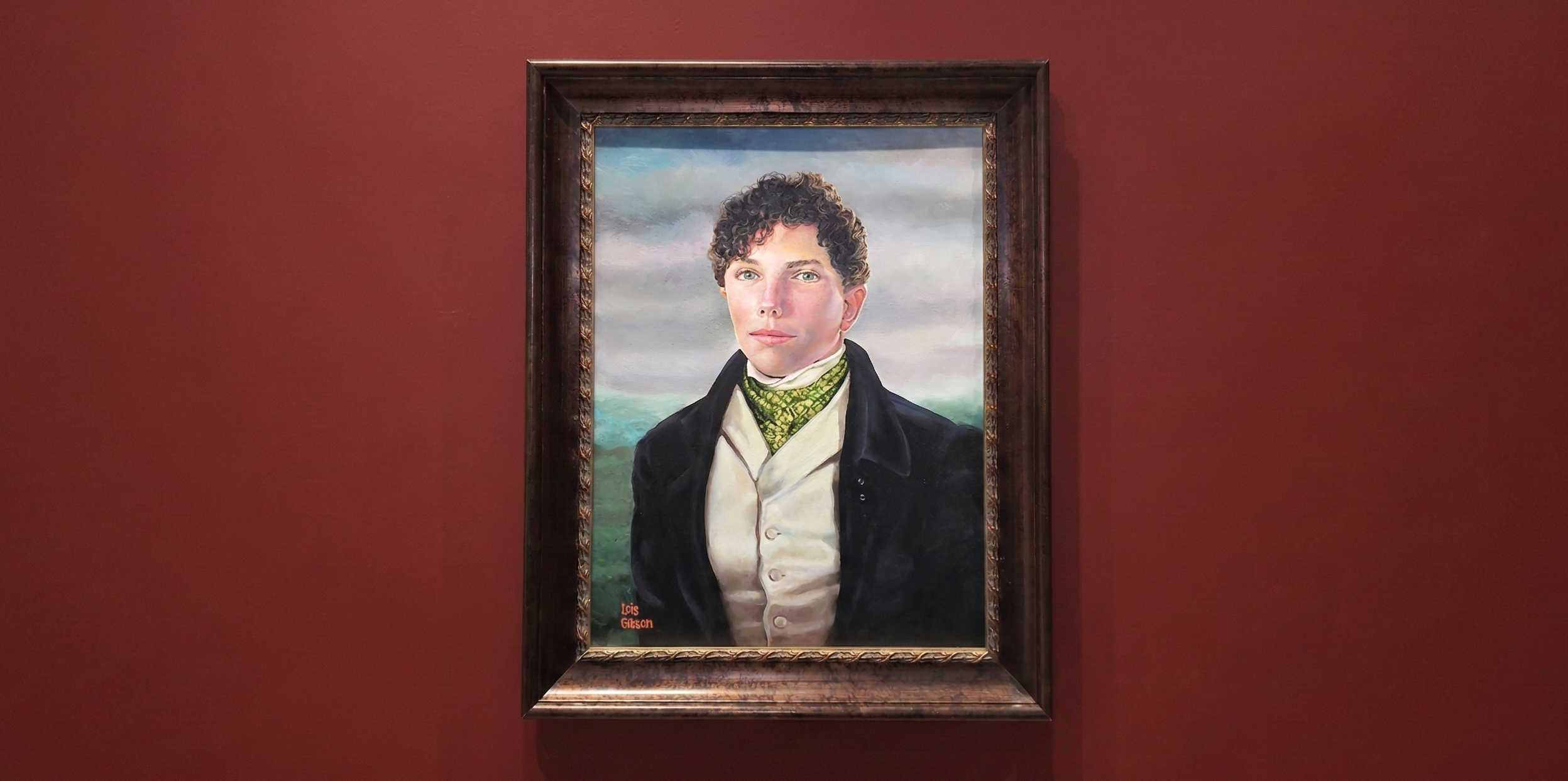
When we talk about the Alamo, we often picture grizzled frontiersmen—Crockett, Bowie, Travis. We imagine men who had lived long lives, fought many battles, and made their choices with the wisdom of experience.
But the youngest defender to die at the Alamo wasn’t a man at all. He was a 15-year-old boy named William Philip King. And he wasn’t even supposed to be there.
The story of how William ended up behind the walls of the mission is one of the most heartbreaking and pragmatic sacrifices in the history of the Texas Republic. It is a story of a son who looked at his father and realized: One of us has to die so the rest can live.
The King Family on the Frontier
To understand William, you have to understand his father, John Gladden King. The Kings were true pioneers, having migrated from South Carolina through the deep south before arriving in Texas in April 1830. They settled on a league of land on the Guadalupe River, northwest of Gonzales, operating a stagecoach inn and a farm.
John Gladden King wasn’t just a farmer; he was a survivor of Texas’ bloodiest history. He had fought in the Battle of Medina in 1813, a catastrophic defeat where the Spanish Army annihilated the Republican Army of the North. He knew firsthand the brutality of the Mexican army under commanders like Santa Anna (who was a young lieutenant at Medina).
By 1836, the King family had grown large—roughly nine children. William, at 15, was the oldest.
The Impossible Exchange
In late February 1836, Colonel Travis sent his desperate letters from the Alamo, begging for reinforcements. The only town to answer the call was Gonzales.
The “Immortal 32″—the Gonzales Ranging Company of Mounted Volunteers—began to muster. John Gladden King prepared to ride. It was his duty. But as he saddled his horse, his teenage son stopped him.
The conversation that followed, pieced together from family history, is a testament to the brutal reality of frontier life. William argued that his father could not go. The family was too large, the frontier too dangerous, and the younger children too dependent on him. If John died, the family would starve or be scattered.
“I can shoot as good as you can,” William reportedly told his father.
Accounts suggest John was also suffering from illness at the time, perhaps dysentery or fatigue. Swayed by his son’s logic and his own condition, John Gladden King made the hardest decision of his life. He handed his rifle to his 15-year-old boy.
Into the Fire
William rode out of Gonzales with the relief force on February 27. On March 1, 1836, at 3:00 AM, they slipped through the Mexican lines and entered the Alamo. They were the only reinforcements Travis would ever receive.
Despite his age, William was not treated as a child inside the fortress. Records indicate he was assigned to a cannon crew, manning the artillery that kept the Mexican army at bay during the siege.
Five days later, on the morning of March 6, the walls were breached. William Philip King died at his post. He was 15 years, 5 months, and 2 days old.
The Aftermath
Back in Gonzales, the King family was waiting. On March 11, the silence was broken by the arrival of Susanna Dickinson, the widow of Alamo defender Almaron Dickinson. She brought the news that Santa Anna had spared no one.
For John Gladden King, the news was a double blow. He had lost his firstborn son, but he had no time to grieve. General Sam Houston, realizing the Mexican army was marching east, ordered the town of Gonzales burned. The “Runaway Scrape” had begun.
Because William had taken his place, John was alive to load his wife and surviving children into a wagon. He drove them east toward the Sabine River, navigating the chaos and panic that engulfed Texas. The family survived the war because John was there to protect them—a survival purchased entirely by William.
A Legacy Remembered
William’s sacrifice is memorialized in the geography of Texas itself. King County is named in his honor.
Every time we read the list of the Alamo defenders, we see “William Philip King” listed among the men. But he serves as a reminder that the fight for Texas wasn’t just about glory or politics; for one family on the Guadalupe River, it was a trade—a father’s life for a son’s, to ensure the survival of the ones left behind.
Sources & Further Reading
- The Handbook of Texas: King, William Philip – Texas State Historical Association
- The Handbook of Texas: King, John Gladden – Texas State Historical Association
- The Alamo: Defender Bios – Official Alamo Website
- Walter Lord: A Time to Stand – The definitive narrative history of the Battle of the Alamo.
- Sons of DeWitt Colony Texas: The King Family History – Archives and family memoirs.
The featured image shows the painting of William that hangs in the Alamo museum. There are no known photos or paintings of William from his lifetime, so this is the artist’s best interpretation of what he might have looked like.
William is a 4th great-granduncle of the author of this blog.
Leave a Reply