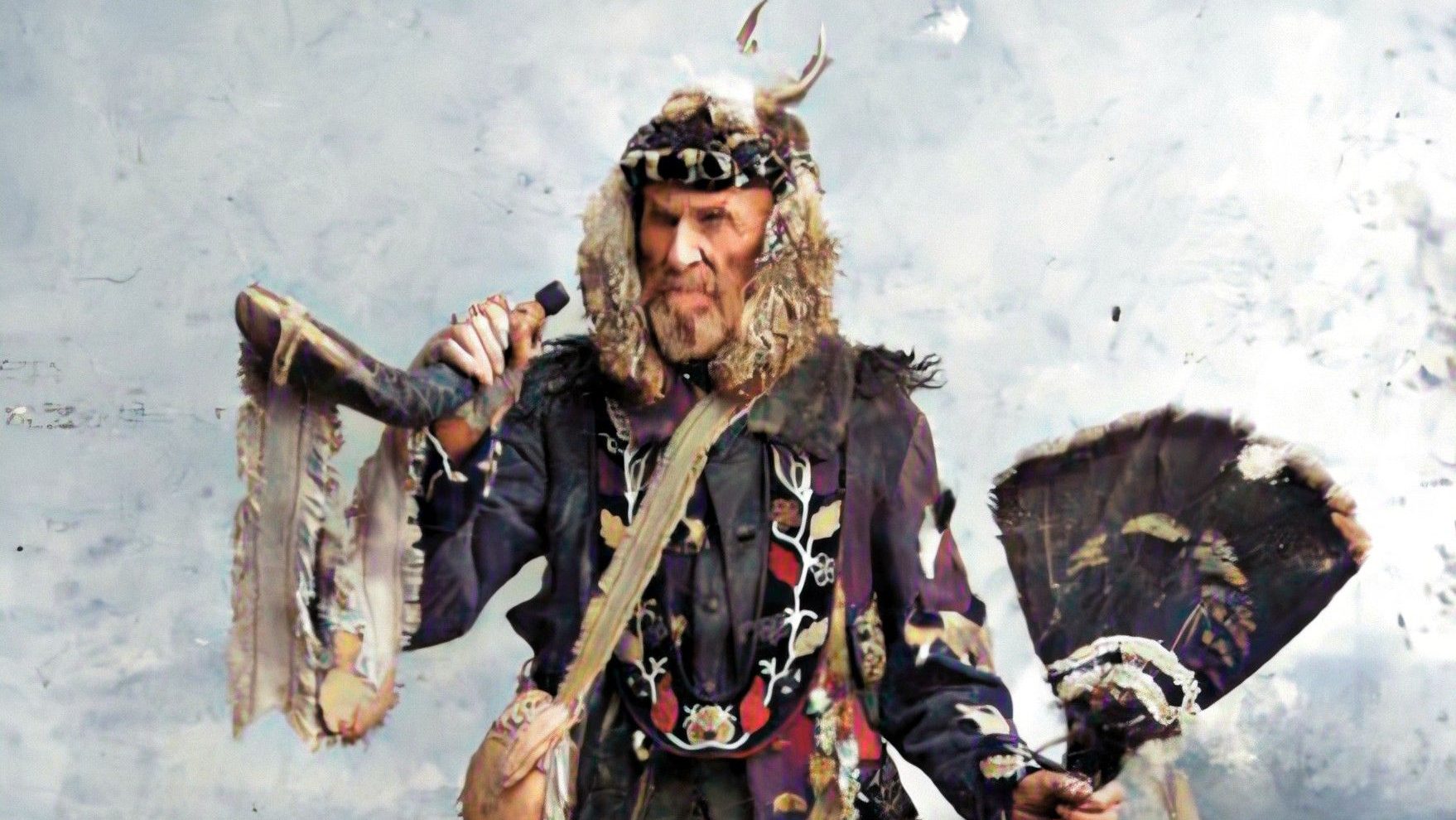
Robert Hall was a true Texas pioneer – an Indian fighter, Texas Ranger, and veteran of the Texas Revolution, Mexican-American War, and Civil War. By all accounts, he was also quite the character. Let’s dive deep into his life and legacy.
Early Life
Robert Hall was born in South Carolina on April 14, 1814, to parents James B. Hall and Rebecca Gassamary Hall. His paternal grandfather, Fanton Hall, was of Irish descent. The Hall family eventually settled in the Rocky River District on the old Charleston Road, an area frequently traveled by migrants, merchants, and military figures. In his memoirs, Hall recounts glimpses of major historical personalities there—he wrote that he “once saw General Jackson and John C. Calhoun.”
Hall grew up in a devoutly religious, Hard-Shell Baptist community, with neighbors who “turned a man out of church because he refused to pay a debt”. Hunting and fishing along the frontier were among Hall’s earliest passions.
When Hall was still a child, the family moved to Tennessee, settling in Gibson County on the Rutherford Fork of the O’Brien River. Hall’s father died there in 1833.
As a teenager, Hall was “extremely wild” by his own account, and after a quarrel with his brother, he left home and began what he called his “flatboatman” phase, working on rough boats along the Mississippi. In the 1830s, he ventured to the still-unsettled regions of Arkansas, the Mississippi Delta, and Louisiana, forming the bedrock of his frontier-honed skills. His experiences with rowdy crews, gambling, and outlaw figures—like the notorious John A. Murrel—introduced Hall to the violence and unpredictability of frontier life.
Arrival in Texas
Hall heard rumors of conflict brewing between Anglo Texians and Mexico. He was drawn to the Texian cause, first journeying to Natchez and then traveling by steamer to New Orleans. While in Natchez, he enlisted in Capt. Earl’s company, part of Col. Harrison’s Kentucky volunteers, and headed to the Republic of Texas via Lake Pontchartrain, the Red River, and overland roads. Hall arrived in Texas in the spring of 1836, not long after the fall of the Alamo and the victory at San Jacinto. In his words: “We were not well prepared for the hard march … but we were determined to reach Sam Houston’s army.”
Upon arriving, Hall joined what he calls the “Texian Army,” which was camped on the Lavaca. It was there that Robert Hall first served under Albert Sidney Johnston, who commanded a volunteer militia in the aftermath of San Jacinto. Hall remembered the hardships of that camp: “I never saw a piece of bread the whole time; we lived entirely on beef.” He also described the severe illness in camp, during which “at least three hundred brave fellows” died, wrapped in their blankets and buried on the banks of the Lavaca. Hall himself fell ill, but he credited an older soldier, Jack Bray, with nursing him back to health.
When Robert Hall was discharged from the Texian Army, he traveled to Columbia (the Republic’s capital at the time) and “saw Santa Anna,” who was then a prisoner of war. In a fascinating section of his memoirs, Hall offered a first-person reflection on the Texian soldiers’ dilemma over whether to execute or spare Santa Anna, concluding that General Sam Houston’s pragmatism—and his hope for a negotiated peace—was what saved Santa Anna’s life.
Love and Marriage
After leaving the army, Hall settled briefly in Montgomery County. There he heard of Col. John G. King, “who had three of the prettiest girls in Texas.” Hall visited King’s home, promptly falling in love with his daughter Mary Minerva “Polly” King. At first, Col. King was cool toward Hall, suspecting he might already be married back in the States, but Hall proved otherwise.
His chance to demonstrate his mettle—and win King’s trust—came when a Comanche raid killed Mrs. Taylor and her daughter at Fanthorp’s on Grimes Prairie. A militia was formed; Hall and King joined in pursuit of the raiders. That campaign ultimately secured Hall’s place in King’s esteem.

Robert Hall married Mary “Polly” King on June 20, 1837: “We lived together forty-five years, and thirteen children were born to us. We were always happy together.”
Hall built one of the first homes in the area near Gonzales, on the north side of the Guadalupe River. During these early years, he recalls “living in a little log fort,” growing corn, and fending off Indian raids (ch. X). Despite the near-constant threat from raiders, Hall described a certain rugged optimism among the settlers who “spread out to build homes in the West” (ch. X).
Texas Ranger
Robert Hall joined or led multiple scouting and militia companies in the late 1830s through 1840s to protect frontier settlements. He rode under the command of celebrated Indian fighter Capt. Mathew “Old Paint” Caldwell, served alongside such figures as the McCulloch brothers (Ben and Henry), Creed Taylor, and the legendary Jack C. Hays. Hall’s accounts of these men appear throughout his memoirs:
- Capt. Mathew Caldwell, nicknamed “Old Paint” for the “white spots on his breast”, was a “noted Indian fighter” who, according to Hall, possessed “a heart of gold.” Hall served as Caldwell’s second lieutenant in a frontier ranger company, assisting in “chasing down Comanche raiding parties” who had captured or killed local settlers.
- Ben McCulloch was Hall’s close associate; they fought side by side in multiple engagements. Hall references him when recounting scouting expeditions during the Mexican–American War.
- Jack C. Hays, the renowned Texas Ranger captain, is frequently mentioned by Hall as a scouting leader whose feats against the Comanches and Mexican forces are legendary.
Founding of Seguin
The town of Seguin, Texas emerged from humble beginnings as a Texas Ranger outpost called Walnut Springs in 1838. The settlement quickly attracted frontiersmen and families seeking a fresh start, among them Robert Hall.
When settlers discovered another town had claimed “Walnut Springs,” they gathered for a vote in 1839. By a margin of 18 to 7, they chose to honor Juan Nepomuceno Seguin, a Tejano patriot who fought at San Jacinto. That decision reflected the deep respect early Texans held for their Mexican allies who supported independence.
Robert Hall’s contributions to Seguin went far beyond helping lay out its streets. As a lieutenant under the legendary “Old Paint” Caldwell, he protected the fledgling town from raids. His memoirs paint vivid pictures of frontier life, including an amusing tale of Comanches trying to steal horses by imitating duck calls – a plan that backfired when townspeople realized there weren’t any ducks in town.
Hall’s home, built in 1838-39, still stands as one of Seguin’s oldest structures. Made of experimental “limecrete” (an early form of concrete), it anticipated the town’s later fame for having the largest concentration of early concrete buildings in America.

Battles With Comanches
Battle of Plum Creek (August 12, 1840): One of the largest engagements Hall participated in was the Battle of Plum Creek—fought near Lockhart, Texas—when some 500 Comanches, flush with loot after sacking Linnville, ran into a combined Texian force. Hall vividly describes the Comanches’ flamboyant parade—ribbons, stolen hats, clothes draped over their horses—and the Texans’ well-coordinated counterattack under General Felix Huston and Ed Burleson. Hall himself was severely wounded, an arrow passing through his thigh, “the blood ran until it sloshed out of my boots.” He credited Comanche overconfidence and the effective Texian charge for this victory, writing, “It was the end of their long reign of terror in Texas”.
He also recounts seeing unimaginable horrors after the battle, including the bodies of captives, and describes how the allied Tonkawa scouts in the Texian force “cut up the dead Comanches into pieces and ate them,” believing that this ritual granted them bravery.
“They offered me a piece … but I politely informed them that I had just eaten a rattlesnake.”
– Life of Robert Hall
Raids and Rescue of Captives: Hall’s memoir includes references to various Comanche raids—particularly those involving the capture of young women or children—and attempts to rescue them. One story details how a captive named Miss Lockhart and another named Miss Putnam were eventually rescued or ransomed back, though one Putnam girl chose to remain with her Comanche husband.
Mexican Invasions
Hall’s memoirs recount two major episodes post-independence:
- The Vasquez and Woll Raids: In 1842, Mexican generals Rafael Vasquez and Adrián Woll separately invaded parts of Texas, temporarily occupying San Antonio. Although these were short-lived seizures, they generated panic along the frontier. Hall fought in what became known as the Battle of Salado Creek (September 18, 1842), in which about 200 Texians under “Old Paint” Caldwell confronted a Mexican force of 1,200 under Gen. Woll. Hall vividly recalls the surprise, the pitched battle near the creek, and how the Texians ultimately forced Woll to retreat.
- The Santa Fe and Mier Expeditions: Hall references these expeditions—both ill-fated attempts by the Republic of Texas to either force or negotiate claims in Mexican territory. Hall was not part of the Mier expedition but recounts the capture and tragic aftermath of certain participants (like the infamous “Black Bean” executions).
Mexican–American War
(1846–1848)
By the mid-1840s, Hall was a seasoned veteran. When the U.S. Army under General Zachary Taylor arrived in Texas, Hall—though initially opposed to Texas’ formal annexation—opted to join a scouting company attached to Taylor’s forces.
Hall served in a spy company of about 30 “picked men,” sometimes led by Ben McCulloch. Their role was to gather intelligence in northern Mexico. They scouted near the Rio Grande, “carrying dispatches, tracking Mexican cavalry, and braving Comanche raids on the frontier.” Hall eventually marched south and participated in the Battles of Monterrey (1846) and Buena Vista (1847).
Battle of Monterrey: Hall provides a typical volunteer soldier’s perspective on urban warfare in Monterrey’s narrow streets. He notes the Texian scouts “used their frontier tactics” to root out Mexican sharpshooters.
Battle of Buena Vista: The highlight of Hall’s war service—he states that Buena Vista was the greatest battle he ever saw, “the roar of cannon and whizz of musket balls” creating a harrowing scene. He describes delivering messages between General Taylor and Santa Anna regarding calls to surrender, seeing the Mexican lines stretch “as far as the eye could see,” and glimpsing the heroic stand of units like Jefferson Davis’ Mississippi Rifles and the artillery of Captains Bragg and Washington. He wrote: “We fought two enemies at Buena Vista—[the people in Washington] who kept stripping General Taylor of troops and Santa Anna—and we were victorious.” Hall’s recollections capture the tension of that two-day engagement, the improbable U.S. victory, and the mass casualties left behind on the field.
The Civil War
After the Mexican–American War, Hall returned to Gonzales and resumed frontier life. He farmed and raised livestock until the outbreak of the Civil War. Although he was personally against secession and “disliked slavery,” as he states in his memoirs, he still enlisted in a Texas cavalry regiment for frontier defense. Hall’s Civil War service was largely on the Texas homefront, where forces under the Trans-Mississippi Department warded off Federal threats along the Gulf Coast and the Rio Grande.
Memoirs and Storytelling
As Hall aged, he became something of a living repository for Texas history. From the Texas Revolution through the frontier Indian wars, from the Mexican–American War to the Civil War, Hall had fought in virtually every conflict shaping the region. This gave him a broad perspective, which he shared in his memoirs—originally published in 1898 under the title Life of Robert Hall, Indian Fighter and Veteran of Three Great Wars (credited to “Brazos,” a pseudonym of the editor).
Hall included a short “sketch” of his friend William “Big Foot” Wallace at the close of his memoirs—another famed Texan known for frontier exploits, Mier imprisonment, and Ranger service.
Friends and Acquaintances
Throughout his life, Hall personally knew or fought beside legendary Texan figures. Among his comrades were:
- Sam Houston, whom he met and corresponded with at multiple points, from Columbia to the later Republic years. State archives show that he once wrote Sam Houston asking to make him lead a company of Rangers to fight indian tribes before the Civil War, but there is no evidence that Sam Houston ever responded.
- Mathew “Old Paint” Caldwell, his Ranger captain, famed for the Battle of Plum Creek.
- Ben and Henry McCulloch, frontier scouts of considerable renown.
- Jack C. Hays, the Ranger captain who revolutionized mounted combat with the Colt revolver.
- Edward Burleson, vice president of the Republic, who also served at San Jacinto.
- Colonel “Davy” Crockett: Hall mentions meeting Crockett back in Tennessee. He claimed to have cast his first vote for Crockett in a congressional race, forging an admiration that lasted beyond Crockett’s death at the Alamo.
He also encountered the famed Mexican General Antonio López de Santa Anna more than once—first as a Texian soldier (albeit arriving after San Jacinto), and later during the Mexican–American War.
Final Years and Death
By the 1880s and 1890s, Hall was widely known as an “old Texian,” recognized at veterans’ gatherings. Late in life, he was living near Cotulla, Texas, though he frequently visited Gonzales and Seguin, where many of his children and grandchildren lived. Contemporary newspaper articles portrayed him as a “colorful relic of the Republic” who at times donned a patchwork frontier coat made from skins of different animals, trimmed with bear claws and deer hooves.
He was tall—well over six feet—and robust for his age.
He died on April 2, 1899, aged 85. Hall was buried in Belmont, Texas, near the site where he and Polly had once lived.
His 1898 memoir remains a rich source of firsthand accounts of frontier warfare, pioneering life, and the earliest days of the Texas Republic. Through Life of Robert Hall and other recollections, historians grasp the vivid texture of the 19th-century Texas frontier—its dangers, its larger-than-life figures, and the extraordinary perseverance of those who settled it.
Robert is a 4th great-grandfather of the author of this blog.
You must be logged in to post a comment.