A Multicultural Celebration
Christmas in early Texas was far more than a single holiday – it was a rich tapestry of traditions brought together by the diverse peoples who made Texas their home. Spanish and Mexican celebrations centered on Las Posadas and midnight mass, while German immigrants introduced Christmas trees and Advent calendars. African American communities developed their own distinctive celebrations, blending religious observances with family gatherings and watch night services that took on special significance after emancipation.

Tejano Traditions
Spanish and Mexican traditions formed the earliest Christmas celebrations in Texas. Las Posadas, a nine-day celebration reenacting Mary and Joseph’s search for lodging, brought entire communities together. Families hosted evening gatherings featuring piñatas, tamales, and the singing of villancicos (Christmas carols). The pastorela tradition, featuring dramatic representations of the nativity story, often incorporated local themes and characters, creating uniquely Tejano interpretations of the Christmas story.
German Influences
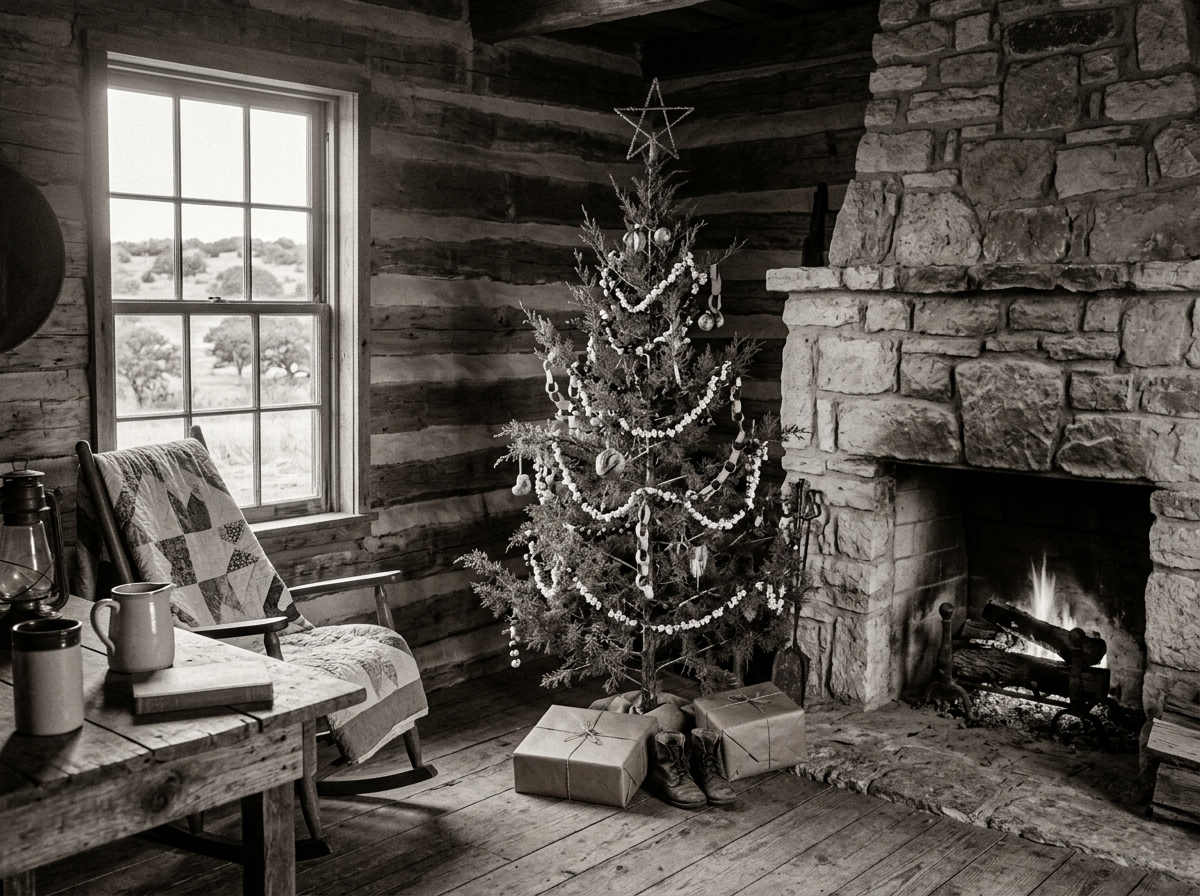
German settlers arriving in the 1830s and 1840s brought traditions that would profoundly influence Texas Christmas celebrations. The Christmas tree tradition first appeared in Texas through German communities, along with Advent wreaths and St. Nicholas Day celebrations. German settlers in communities like New Braunfels and Fredericksburg maintained these customs while adapting them to available materials, often using native cedar trees and decorating with handmade ornaments, local fruits, and pecans.
African American Celebrations
For enslaved people before emancipation, Christmas often provided rare opportunities for family gatherings and celebration. Watch night services on December 31st took on special significance, particularly after 1862 when many gathered to await news of the Emancipation Proclamation. Following emancipation, Christmas became an important time for strengthening family bonds and building community traditions, often incorporating African cultural elements with Christian observances.
Frontier Adaptations
Frontier conditions required creative adaptations of traditional celebrations. Gifts often consisted of practical items like clothing or tools, supplemented with locally made toys and treats. Holiday meals featured available ingredients – wild game, local produce, and preserved foods – prepared according to various cultural traditions. The isolation of frontier life made Christmas an especially important time for community gathering and celebration.
Anglo-American Traditions
Anglo settlers brought their own Christmas customs, including hanging stockings, exchanging gifts on Christmas morning, and preparing traditional English-style Christmas dinners. These traditions often merged with local customs, creating new hybrid celebrations. Santa Claus, initially foreign to many Texas communities, gradually became a universal figure, though his appearance and role varied among different cultural groups.
Material Culture
Archaeological evidence and preserved artifacts provide insights into early Texas Christmas celebrations. Recovered ornaments, toys, and decorative items show both the ingenuity of frontier celebrations and the gradual commercialization of the holiday. Letters and diaries describe Christmas preparations and festivities, revealing how different communities maintained their traditions while adopting elements from their neighbors.
Legacy and Evolution
Many early Texas Christmas traditions survive today, though often in modified form. The German tradition of community singing evolved into the widespread Texas custom of caroling. Tejano Christmas foods like tamales remain an essential part of many Texans’ holiday celebrations. The emphasis on community gathering and hospitality continues to characterize Texas Christmas celebrations, reflecting the enduring influence of various cultural traditions.
Preserving Traditions
Today, numerous historical sites and museums across Texas work to preserve and share these early Christmas traditions. Living history programs demonstrate period decorations and customs, while cultural centers maintain specific ethnic traditions. These efforts help modern Texans understand and appreciate the rich cultural heritage that shaped their current holiday celebrations.
The featured photo was generated to represent a sparsely decorated Christmas tree in the past.